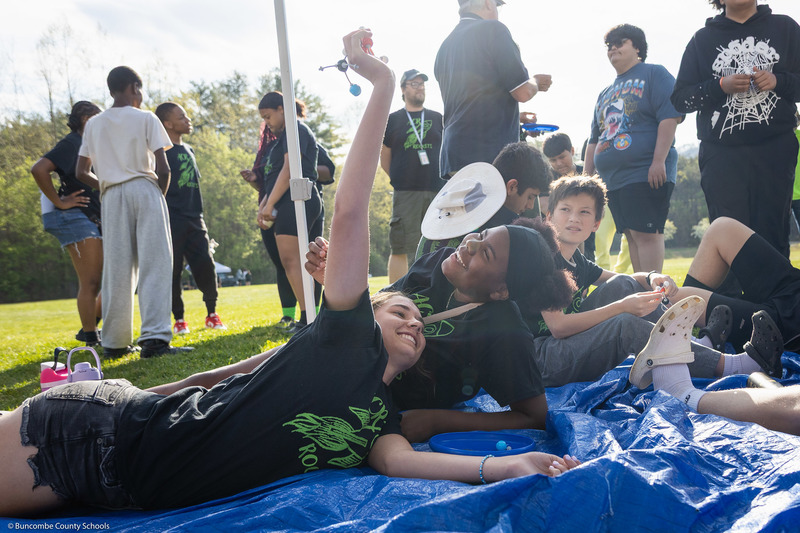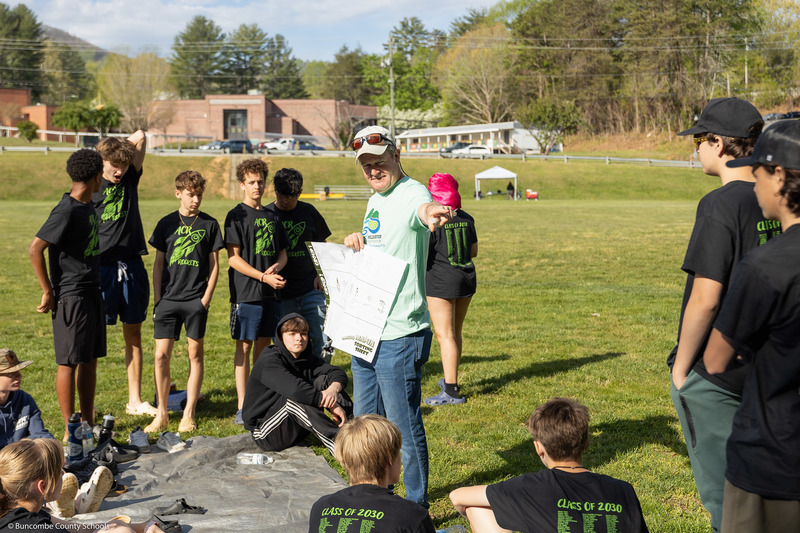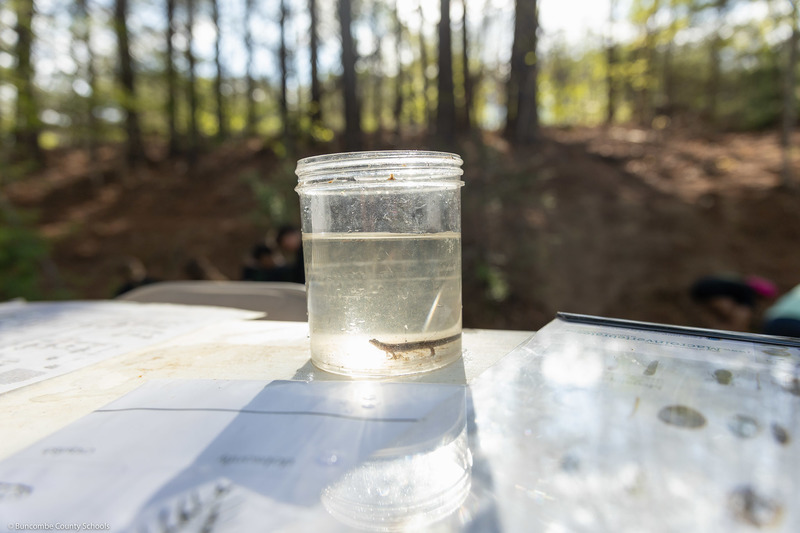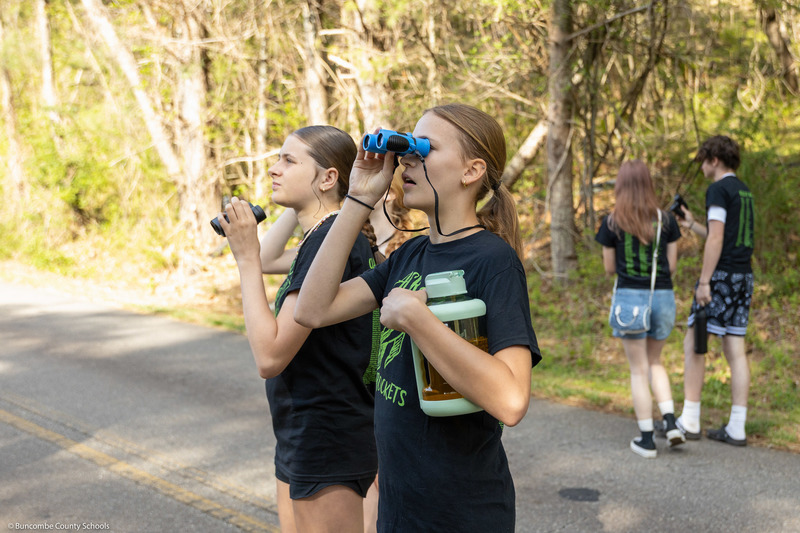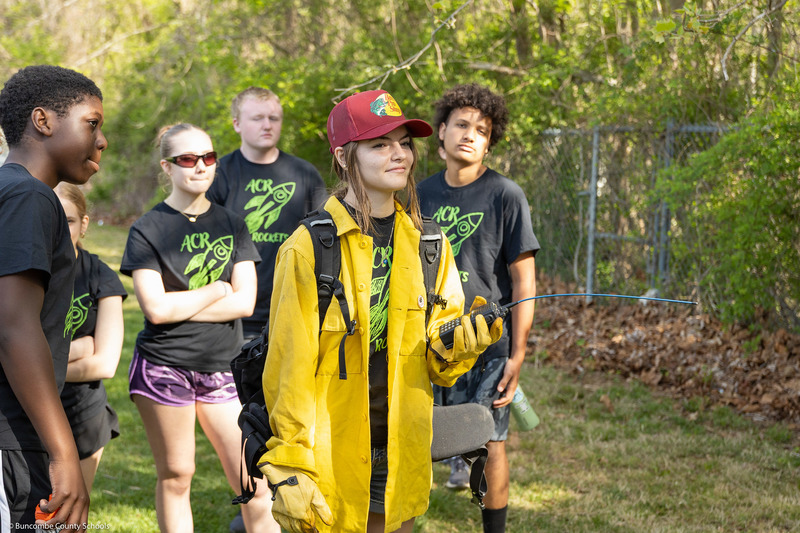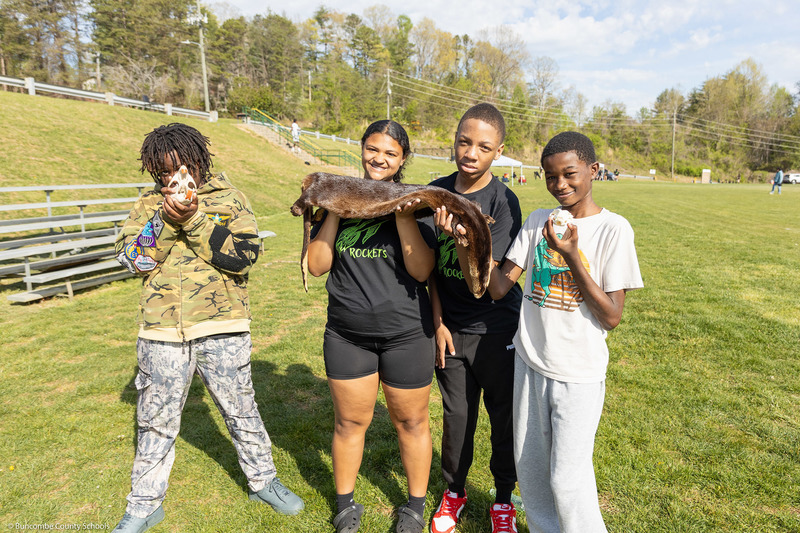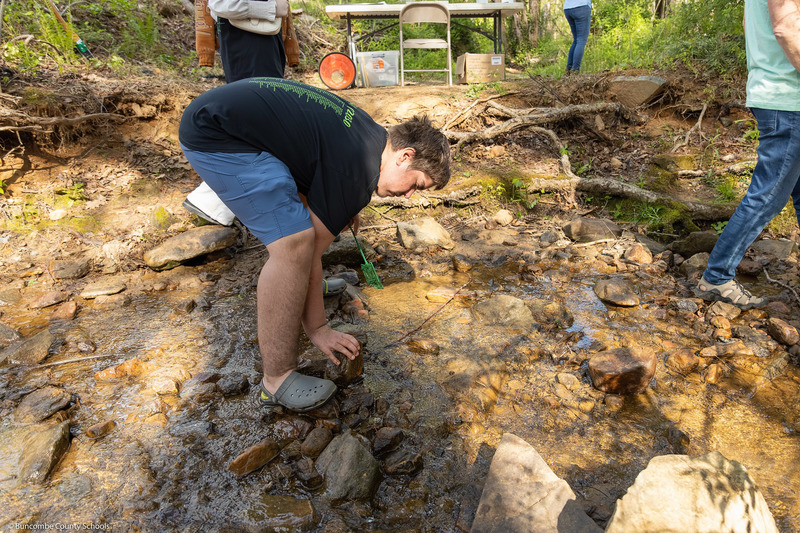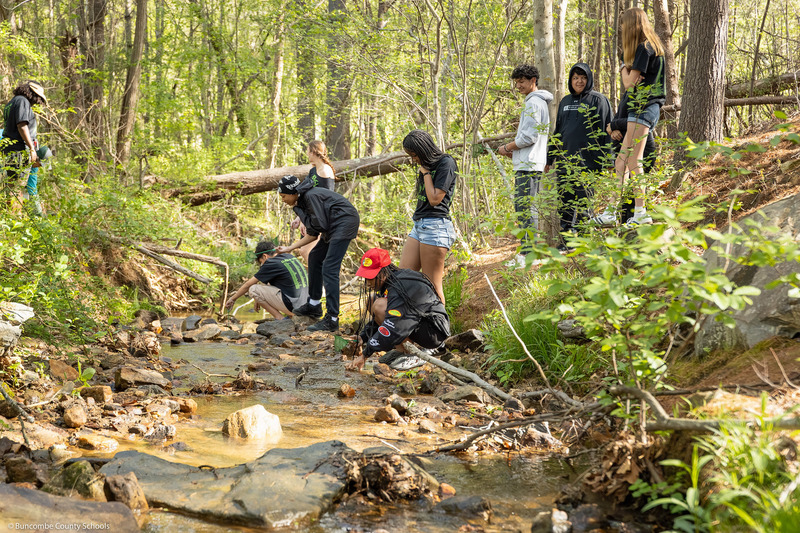
🌎🔬🌿 Eighth graders from A.C. Reynolds Middle School (ACRMS) recently stepped outside the classroom for a hands-on Environmental Field Day, rotating through interactive stations focused on water, ecology, air quality, and environmental stewardship.
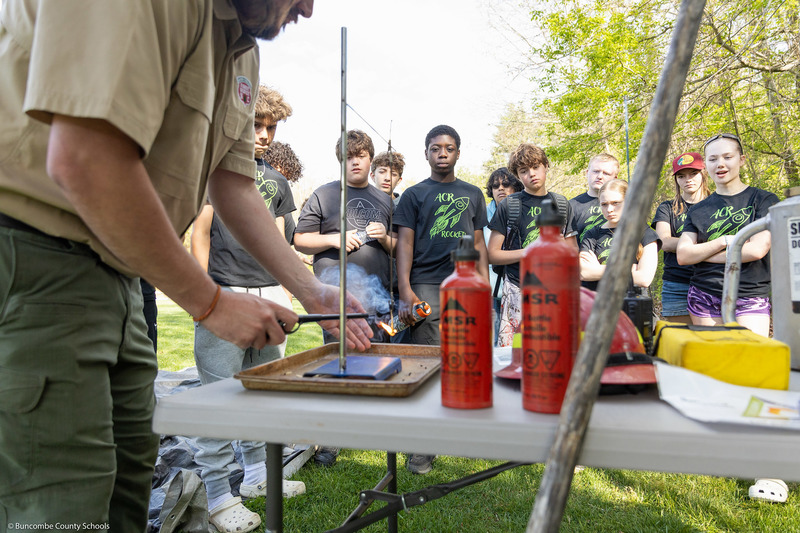
With support from local agencies and community partners, students explored real-world science concepts while connecting them to issues impacting their own lives. Throughout the day, students cycled through seven stations covering topics like air quality, wildlife investigation, soil science, stream ecology, birding, habitat restoration, and fire ecology. Each experience was designed to bring science to life through hands-on learning and direct interaction with experts in the field.
ACRMS eighth grade math teacher Courtney Jones emphasized the value of taking learning beyond the classroom.
“They’re meeting people who work in science fields, rotating through hands-on activities, and seeing how these topics connect to their lives right now,” she said. “Whether it’s air pollution, wildfires, or the environment around them, it makes learning real.”
Jones also highlighted the importance of building connections.
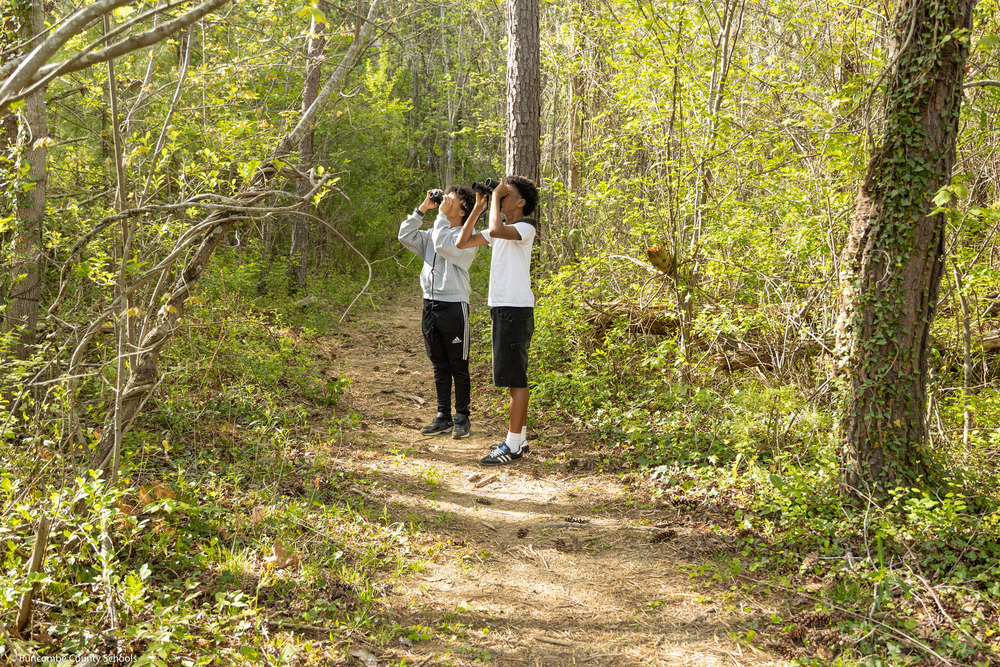
“It gives our students exposure to the community, and it gives the community a chance to connect with our students,” she said. “That relationship matters. Plus, getting them outside, using tools like binoculars or apps to identify birds, helps them notice a world they might otherwise overlook.”
For students, the experience was both engaging and memorable.
Eighth grader Amirria enjoyed the variety of activities, especially one focused on fire science.
“It’s good to get outside,” she said. “My favorite was the fire activity. It was really fun to see how everything reacts to fire and the ingredients that make fire grow.”
She also described a chemistry-based station where students built model molecules and explored air quality concepts.
“We were making different molecules like oxygen and carbon dioxide,” Amirria said. “We learned how things like heat and bonding affect how they react and how pollution can happen.”
The field day reflects a growing emphasis on experiential learning, giving students multiple entry points to discover new interests and better understand the environment around them.
“This kind of experience helps every student find something they connect with,” Jones said. “It’s about discovering new interests, new strengths, and new ways of learning.”
Thanks to Buncombe County Soil and Water, in partnership with Asheville City Stormwater, for organizing and hosting this event! And thanks to all the community partners who helped make this experience possible - North Carolina Department of Environmental Quality, WNC Nature Center, Mills River Partnership, NC Wildlife Federation, and Holmes Educational State Forest.